The wild broccoli 🥦
Current mood: feeling
I am free again
Mood: 🌟 irradiated
Shortly after writing my last blog entry, I fell ill again. It was like a stroke of lightning, just like all the other times. On Friday, I felt well; I went with my husband to see the movie Bugonia (which was very good, and I recommend it); we walked around in the cold and dark together and viewed the movie posters for the upcoming winter in anticipation. The next day, Saturday, I felt feverish and lethargic; my throat hurt; my neck was stiff. I was convinced after several hours to visit the emergency room (the last time I was sick, the urgent care doctor at my university told me that I should just go to the emergency room, as I had exhausted their diagnostic capabilities and they could do nothing to treat me). I thought something like, “Well, maybe they will do a CT scan of my upper body, but probably they will do nothing and chastise me for using up the hospital’s resources when I only have a fever and nonspecific symptoms.”
Within an hour of arriving at the emergency room I had been admitted inpatient to the hospital.

The first day: They didn’t have any rooms available in the hospital, so I was placed in a bed in the hallway. An IV line failed to be placed in my right arm, so my left arm was attempted with better results. My husband stayed with me until it was very late, then had to go home. My chest was X-rayed; there were no significant findings other than the shadow of two nipples, which were marked in yellow with an arrow on the X-ray slide along with a suggestion to re-check if necessary. The ceiling lights were very bright, and I was unable to sleep. I tested negative for a variety of infections, including COVID-19, a panel of less-common respiratory viruses, and syphilis. My C-reactive protein was several times higher than the normal range, as it tends to be. Various blood tests indicated that my organs were functioning normally. I had slight neutrophilia.
At 3 a.m., a room became available, and I was transferred to the internal medicine floor.
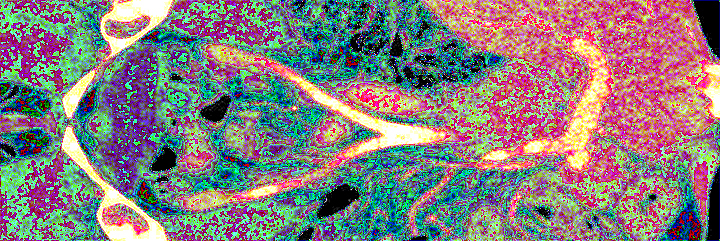
The second day: I slept poorly, as my roommate accidentally left the TV on all night and the daily blood draws were performed at approximately 4 in the morning. At around 9 a.m., I was taken to the radiology floor to have a CT scan performed on my chest and abdomen. Afterwards I ate some fruit cups for breakfast. Due to some sort of clerical mishap, I did not receive lunch or dinner. My husband spent the day with me and brought me some food purchased from the hospital cafeteria. I met with a rheumatologist and an infectious disease doctor, who asked me about all the places I had ever lived and traveled to in my life as well as any potential exposures to wild or domestic animals. Because my parents keep sheep, I was marked as a potential Q fever patient. More labs were ordered. Due to my fear of needles, I was prescribed an anti-anxiety medication to be given one hour before the morning labs.
The CT scans had no significant findings.
The third day: My IV stopped being able to give blood, but continued to be able to receive fluids. I developed hyponatremia and hypoglycemia, perhaps because of the low food intake on the previous day. A great number of potential diagnoses of autoimmune and infectious diseases were ruled out by my blood tests. My fever grew worse and my recollection of events becomes harder to divide into the days. I met with a chaplain, who was impressed by the fact that I regretted missing Mass the past Sunday due to my illness. My roommate pulled out her breathing tube by accident and a very great number of people were suddenly in the room with us. Thankfully, there were no lasting negative consequences of this mishap. My husband spent his lunch break and his evening with me. In the evening I was able to take a shower.
The fourth day: The anti-anxiety medicine I was given in the middle of the night worked so well that I have no memory of the blood draw, and only a mark on my hand to show that it occurred at all. I met with a hematologist who felt optimistic about my disease. Either as part of the natural winding down of my periodic fever or due to the colchicine I had been prescribed, my fever started to go down. My bloodwork continued to be normal save for some anemia (perhaps due to all the blood that had been drawn), elevated IgE, and the mystery of the C-reactive protein. I tested negative for various zoonotic diseases, such as Bartonella, Q fever, and malaria. Because it was a federal holiday, my husband was able to spend the day with me, and it was comforting to have someone who cared for me by my side.
The fifth day: Sadly, the anti-anxiety medication did not erase my memory of the blood draw this time. My roommate was discharged from the hospital, and a new roommate came in. Because I had a PET scan scheduled the next day, I could not eat any carbohydrates in any of my meals. The way that a PET scan works is by injecting a special type of glucose with a radioactive tracer on it into your blood and then seeing which parts of your body are metabolizing that sugar the most. So if you have a tumor, it will be more metabolically active than the rest of your body and look like a glowing ball of light on the scan. I felt better but still very tired, and tried to knit a hat, but my left arm hurt too much from the IV line and I couldn’t make very much progress. My husband was able to spend his lunch break and evening with me, so I wasn’t too lonely during the day.

The final day: I went in for the PET scan.
They found something
glowing
inside
my
body.
I was discharged.